The 15th Rocky Shakuhachi Camp, Kyoto

What do you get when you put 80 players of the shakuhachi together in two floors of one building for four days?
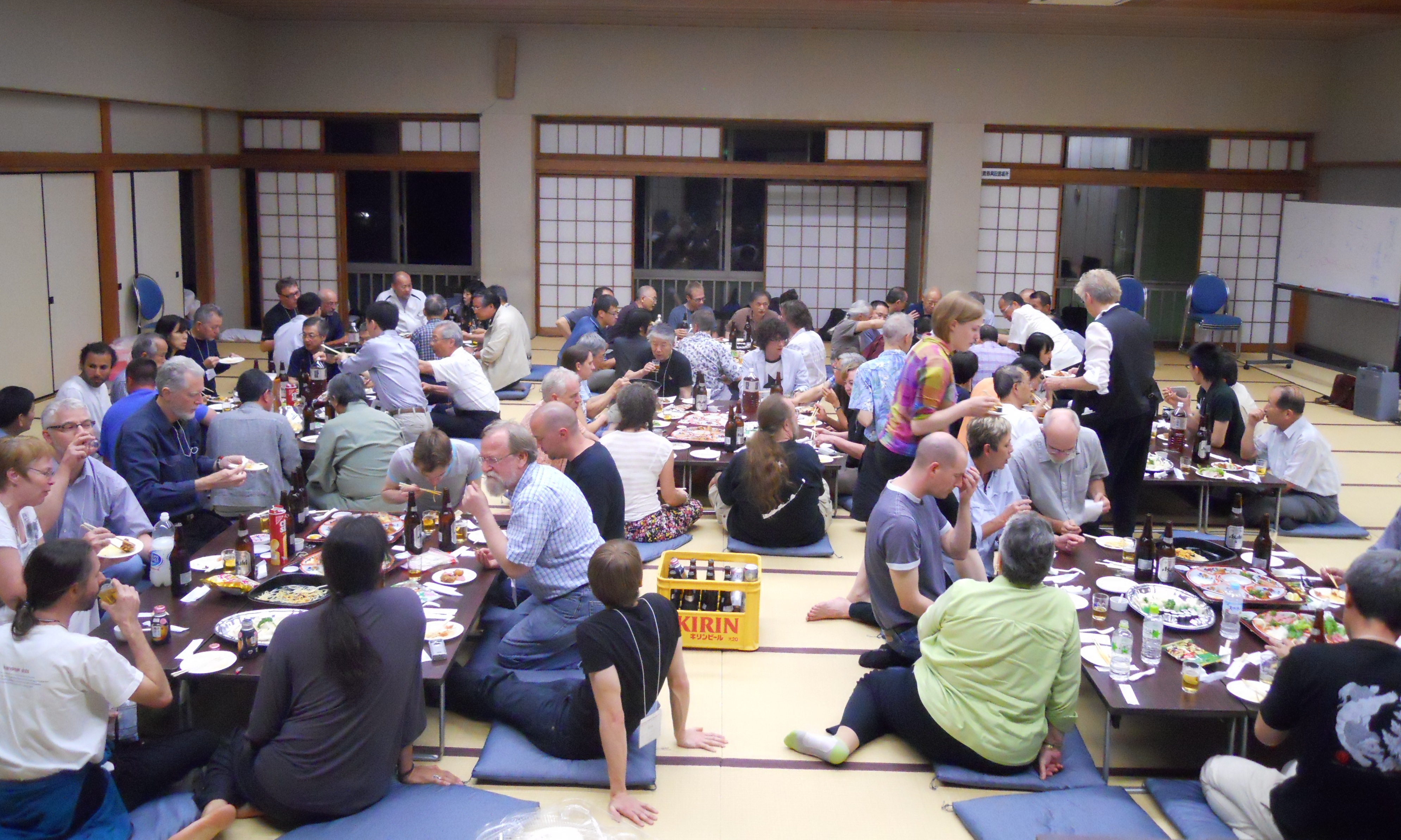
Serious Shakuhachi Practice

A hell of a lot of fun, learning and playing.

The Rockies Shakuhachi Summer Camp is usually held near Boulder, Colorado with about 30 attendees. To more than double the size and transplant it to Kyoto was a miracle that David, Cory, Christopher and the rest of the crew pulled off beautifully. It was a time to explore the many styles and schools of shakuhachi. To refine technique and discover new ways to approach the instrument. To hear some inspiring performances and, perhaps, best of all, it was a place to catch up with old friends and make new ones. In fact, when I think of those few days, what first comes to me is a collection of faces of new close friends passing before my eyes. Their smiles and easy closeness.  The happiness of being together.
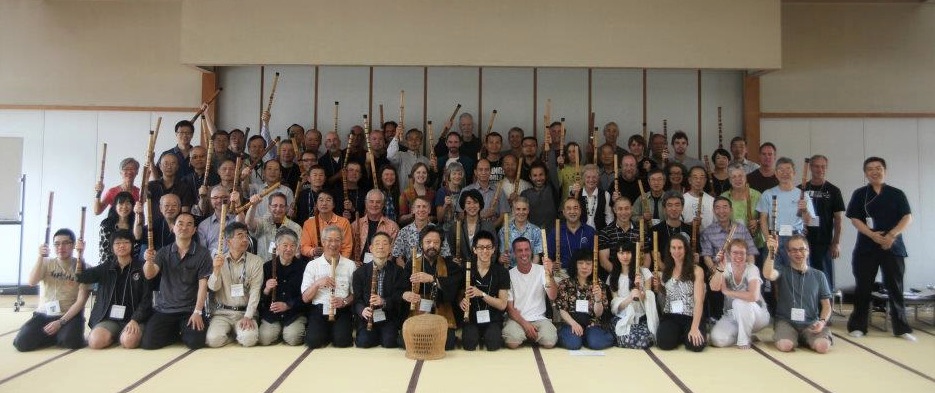
Kyoto Shakuhachi Camp Members

Of course, there were some difficulties. Like Kundan attempting to sit on the floor for the whole camp. “Hey, I sit for an hour at a time occasionally, I can do this.” He went home the first night, thinking, “I wonder why I’m so tired. Maybe it’s my biorhythm. A good night’s sleep will do me.” Half way through the next day, in a small workshop, the sensei asked if he was ok. “Oh, sure,” he said to the fuzzy image before him. The sensei was no fool. He soon called a break and had the translator bring Kundan a chair. Superman quickly returned to life and was able to gather the strength to play his shak again.

The first evening was devoted to introductions. There was supposed to be other stuff but with 80 individuals…  Here are a couple of the many good stories from that evening:

One man wanted to marry the daughter of a shakuhachi teacher. The father told him, “If you want to marry my daughter, you’ll have to learn to play the shakuhachi.”  He knew how to test a suitor’s intentions! Twenty-five years later, the son-in-law is still happily married and is teaching the shakuhachi.

Another Japanese man wasn’t interested in traditional Japanese music. He loved jazz. Then, one night he heard a British musician playing jazz on a shakuhachi (there were some eye brows raised at this suggestion) and loved it. The next day, he was walking his dog and saw that his neighbour, who had the same type of dog, was carrying something shaped like a shakuhachi. Not only was it a shakuhachi but the neighbour is a shakuhachi teacher. And, now his teacher.

The vastness of the camp allowed me to make some great ‘mistakes’ . One was when I wandered into the “wrong” workshop and learned a bit of a beautiful piece “Haru no Umi” that is accompanied by koto. Having only learned solo pieces, this was a fun new experience. At another workshop we all learned some folk tunes. During the camp we got to hear improvisation with tabla, as well as, pieces accompanied by koto, shamisen and singer. (The woman who played the koto, shamisen and sang was the amazing Sawako Fukuhara.) There were absolute beginners who got their own classes and gave heart the rest of us to know that we are a living growing tradition. There were people from all over the world including a group from China who included some very good players. The shakuhachi was originally brought from China to Japan and, then, kinda faded away there. Over the last decade, the shakuhachi returned to China. Chinese players have multiplied and there are over one thousand people studying shakuhachi in China. The last evening, was a student/faculty concert that I joined in amongst a large number of my colleagues for one number. One of the highlights was an arrangement by Elliot Kallen of James Brown’s “I Feel Good”.
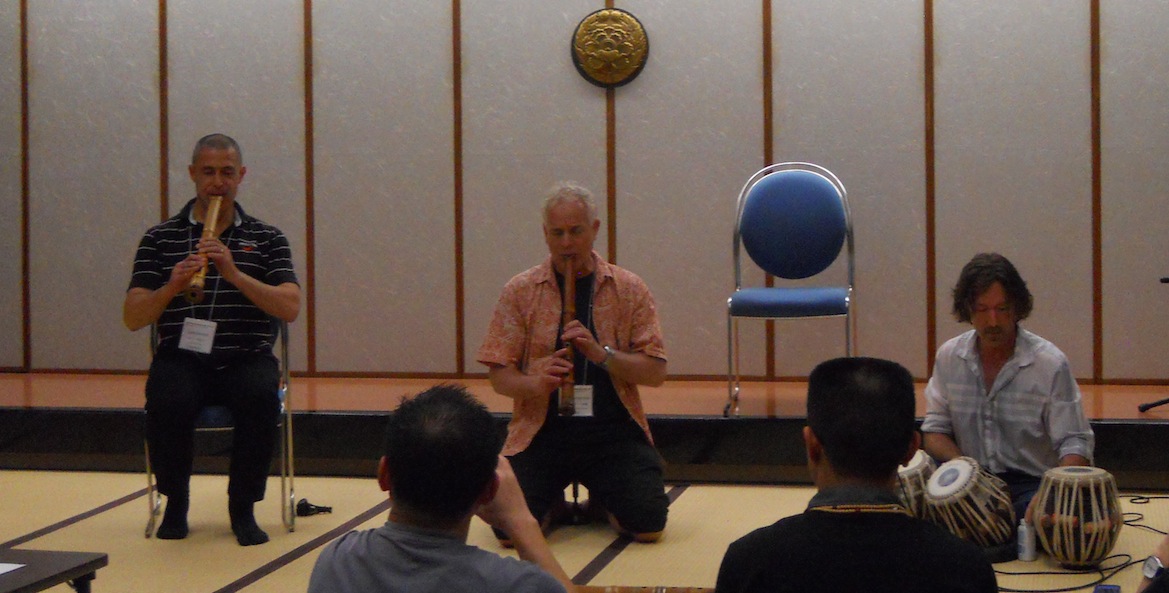
Then, there was the field trip-

We were all given the opportunity to dress as a Komuso and play in the garden of a Zen Temple. The Komuso were the Zen priest who used the shakuhachi as a meditation tool. When outside the temple, they would wear these basket hats and wander freely all over Japan.
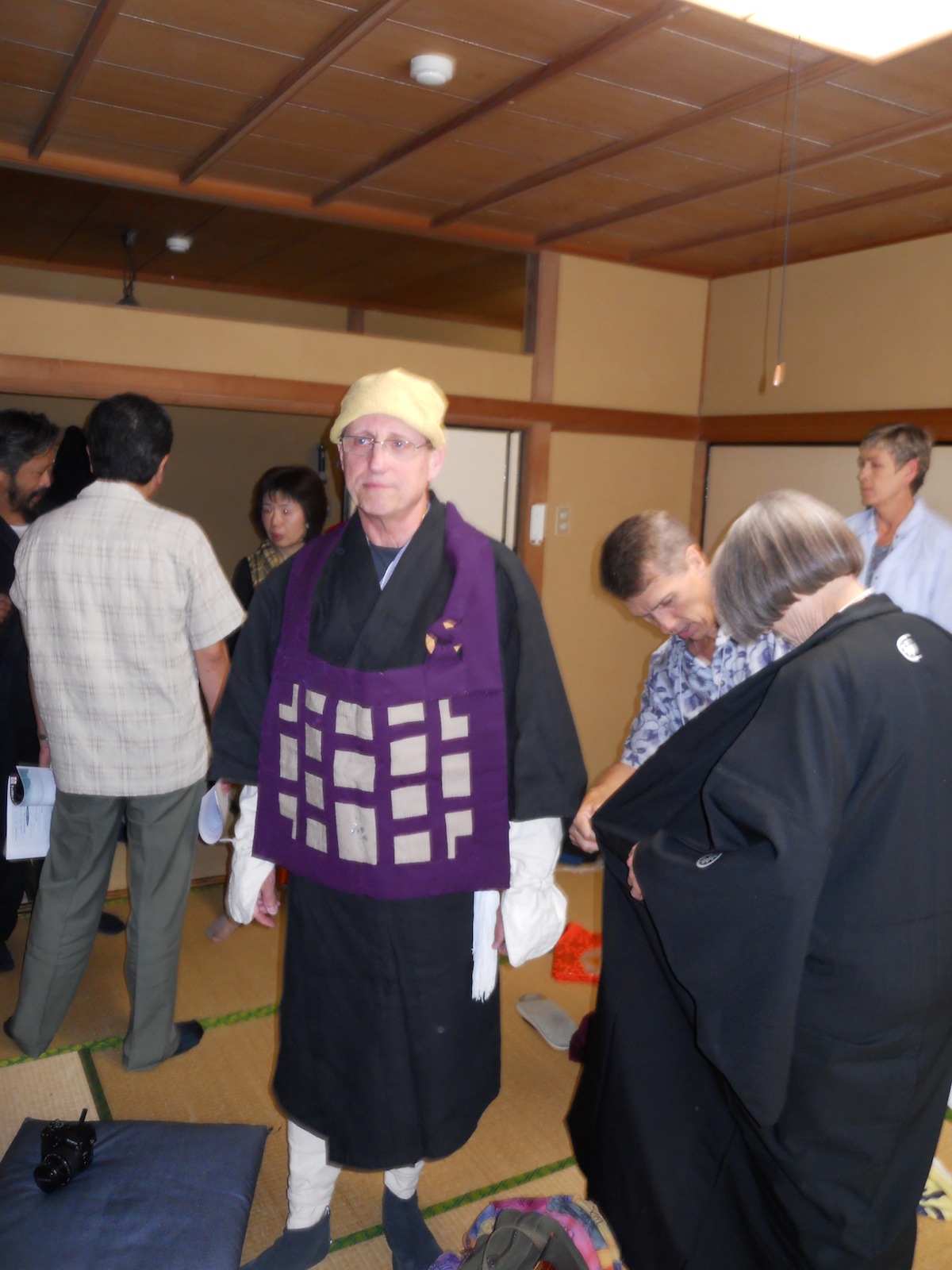
Our one authentically dressed Komuso before the basket.

Many of them were masterless samurai. Eventually, enough rumours of their possibly being spies reached the Shogun that he disbanded them. It is from them that many of the great pieces have been passed down.

To play Komuso in a garden!!!! I jumped at the chance. I was surprised that there were only a dozen of us up for it. We only had six of the basket hats and only one of us had the authentic costume. So, we improvised. Aikido gi, kimono, whatever looked Japanesee.
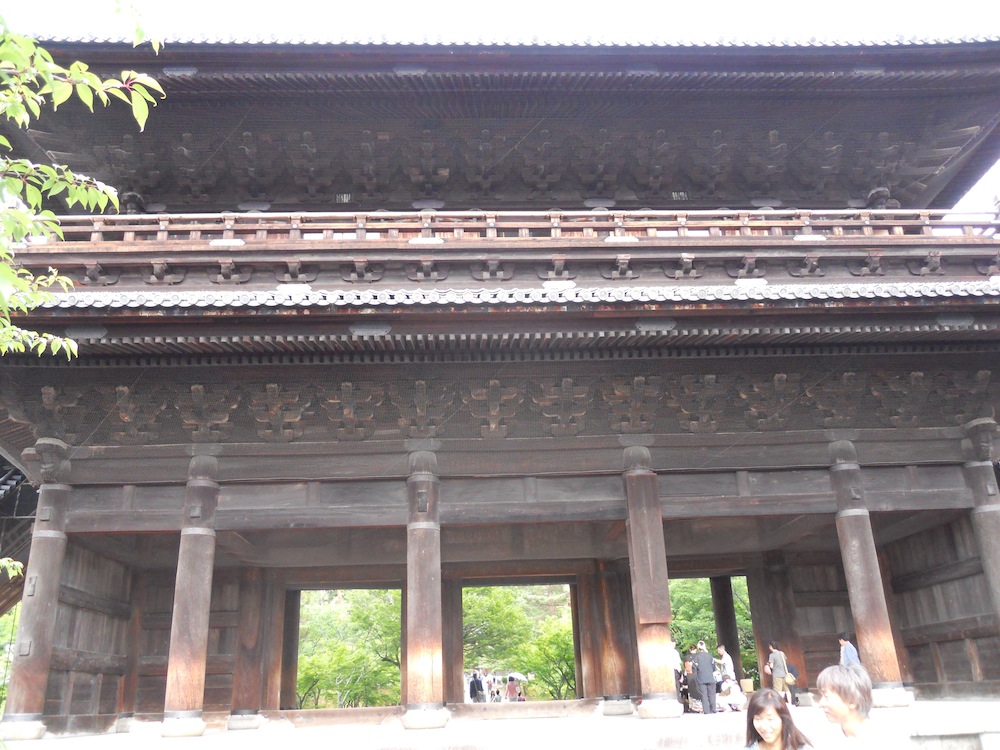
The “Gate” at the Zen temple.

We, then, filled a van and two taxis for a drive across town to a large Zen temple complex. David had picked a splendid location, the ‘Gate’ of the temple.

As the first group of six got fitted with their baskets, tourists (mostly Japanese) started to gather. There were lots of smiles and pictures.
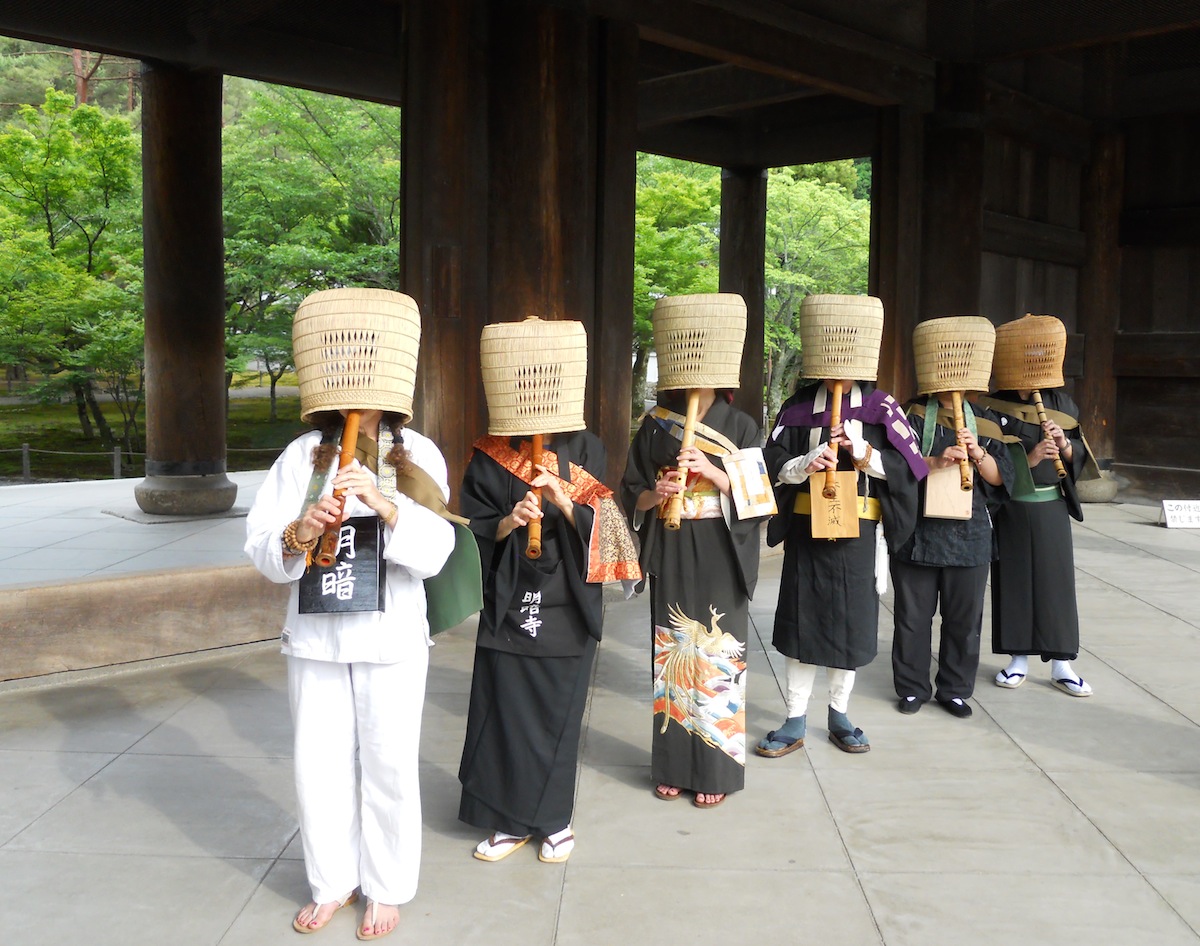
Group One “Komuso”

Everyone was having a great time. One British couple were getting a discourse on the shakuhachi and told of the upcoming festival.

Then… a young woman came tearing down the hill toward the gate in a very official mode. We let her attempt to find out who was in charge for a little while before directing her to the right person. It transpired that we weren’t allowed to have a “photo session” in the temple grounds without applying for permission and paying a fee. Well, we didn’t think of this as a “photo session”, just a bit of fun. So, we packed up and walked over to a small public roadway within the temple complex and continued our adventure. 86ed from a Zen temple. That was a new one.

We left the tourists behind but there were still some passersby.

Even with the basket hat, they found me.
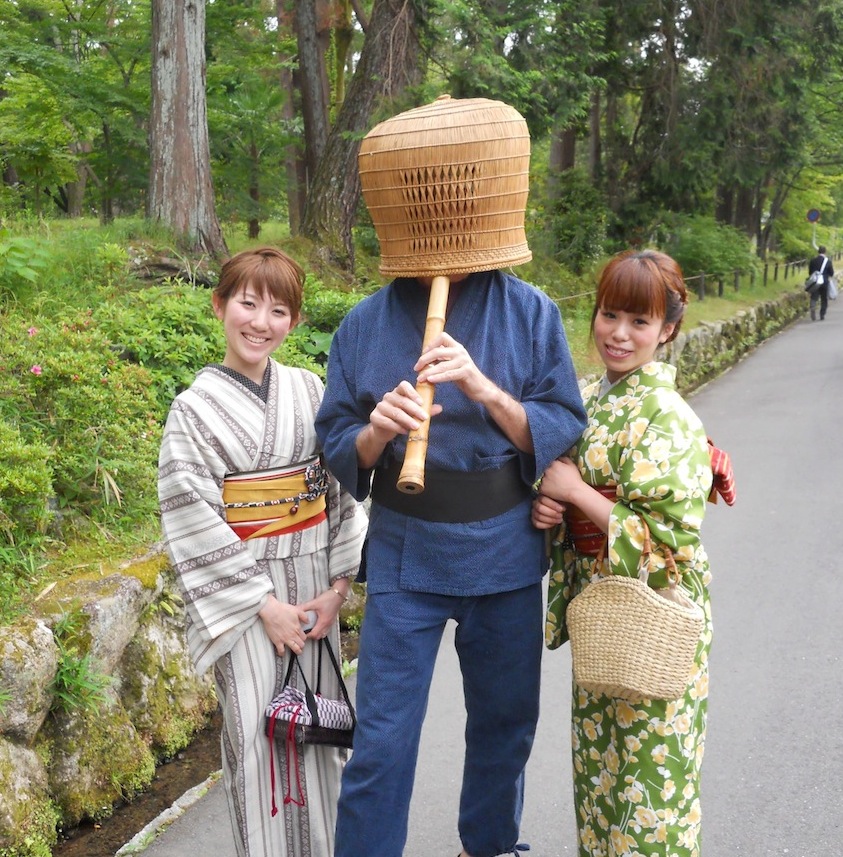
K & The Geisha
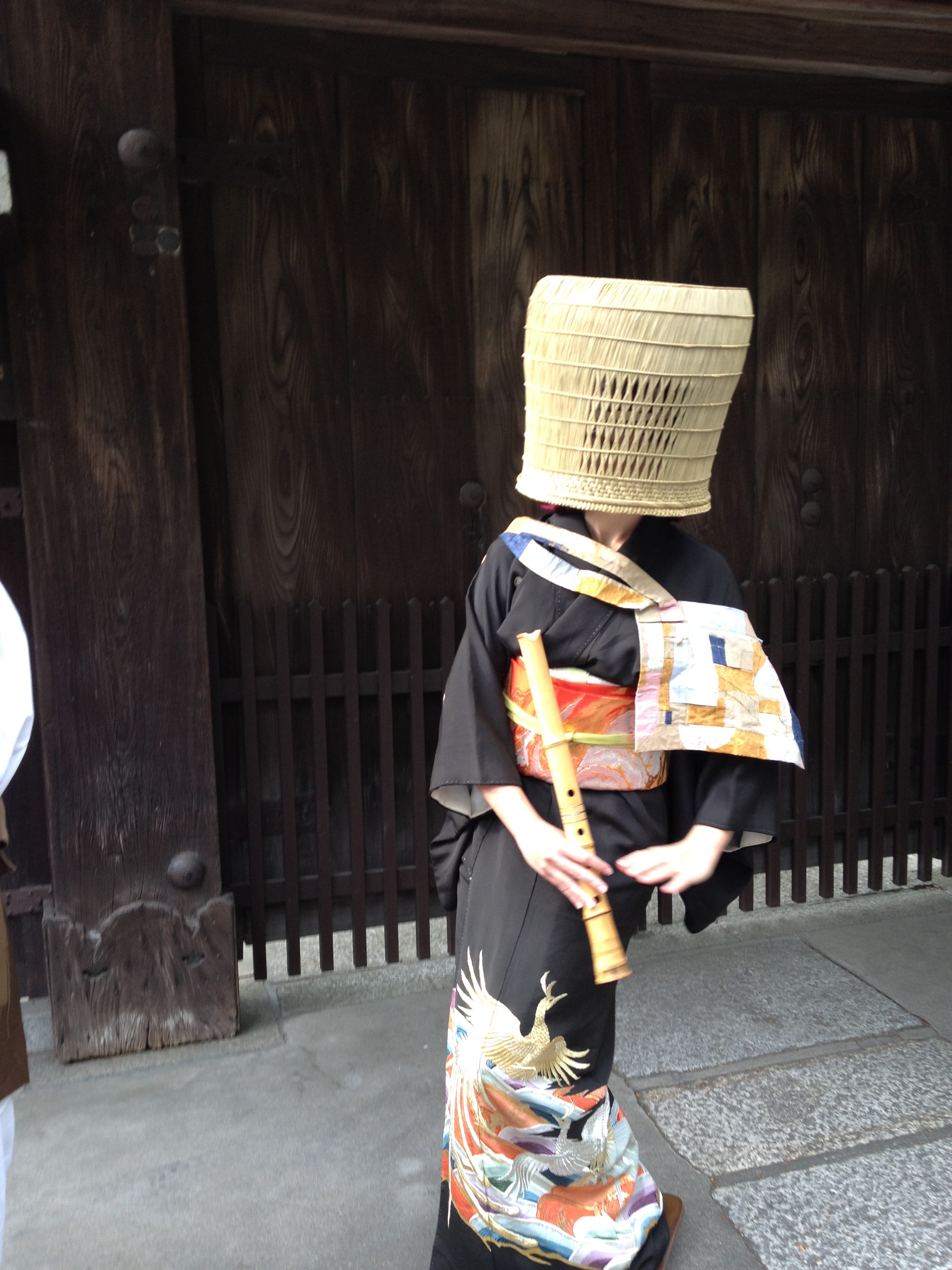
A Model Komuso

Meanwhile, back at the ranch:

There were so many great sessions. I’ll just write a little about two of them.

One of the special guests was Junsuke Kawase III. Among other things he told us that twenty- five years ago he gave up smoking. Besides gaining a little weight, he developed asthma. It got so bad that he couldn’t play his shakuhachi. He was inhaling steroids up to six times a day. He asked his doctor if the treatments would cure his asthma and was told, “No, we’re only dealing with the symptoms.” Then, a friend told him of having a successful treatment in Beijing. So, off to Bejing where he started treatment with a Qi Gung doctor. In a very short time, he felt much better and was able to start playing his flute. The Qi Gung doctor said to him, “I didn’t know that they had such a Qi Gung instrument in Japan.” Junsuke went on to tell us some of what he learned about Qi Gung and it’s relation to playing the shakuhachi.

On the last day, the Super Session was with Ichizan Hoshida-sensei. He started by asking us if, when we warmed up in the morning, did we start off blowing the best note we could or just blowing. I was one of the majority who raised their hands to the latter. It was an eye opener to me. Among other things, he talked about starting off with just blowing at 40% strength for four seconds at a time and making each blow the best note that we could blow. I remembered this.

The camp ended at noon and the World Shakuhachi Festival Competition Final Performances began at one o’clock in the same building. There were 24 contestants. It was open to anyone of any age with any level of experience. Most of the contestants were in and around their 20s. What surprised me was the entry of Riley Lee in the competition. If you don’t know, Riley Lee has been playing the shakuhachi since the early seventies. He has performed publicly for many of those years and has produced a large number of excellent cds. To say that I was puzzled is an understatement. My answer was to arrive:

This is how I experienced it. The competitions finalists included some of the finest young up coming players. It was, of course, a highly charged event for them and they would have been listening very carefully to the other players. They each played two pieces. The first was a choice of two pieces that the organisers provided. One with two koto accompanying. It was very melodious. The second with koto  and shamisen contained some very intense sections with the solo being a slower interlude. The second piece played was a choice of the player and only limited by time. Riley was number 22 in order of playing the first piece. Watching the other performers, they would stand or sit beside the accompanists and, facing the audience, would nod when ready and set off into the piece. When Riley came on stage, he adjusted his chair to the side of the accompanists so that he was facing both them and the audience. As he played, he and the koto and shamisen were playing as a unit. Then, when he came to the solo part, it was Riley sitting there alone surrounded by a silent stillness out of which came the exquisite sound of the shakuhachi. When Riley played his other solo piece, that same intense experience occurred. To be present when a shakuhachi master plays at such heights is a rare opportunity.

The morning after the camp, I woke at 5 am. (Not on purpose!) By 5:30, I was in the garden of a small shrine moving through a beautiful slow Yang Chen Fu form. Then, I unpacked my shakuhachi. I stood feeling the energy move up from the earth to mix with the breath in my belly, then, to rise up at 45% strength to emerge as the best note that I could blow. I continued this way maintaining the 45% strength for a length of time until I felt the energy of my breath increase of its own accord and while I stayed relaxed it moved up to emerge as a loud best note I could blow. I had often wondered about the term “Suizen” (blowing zen). That morning, I felt that I had tasted it.
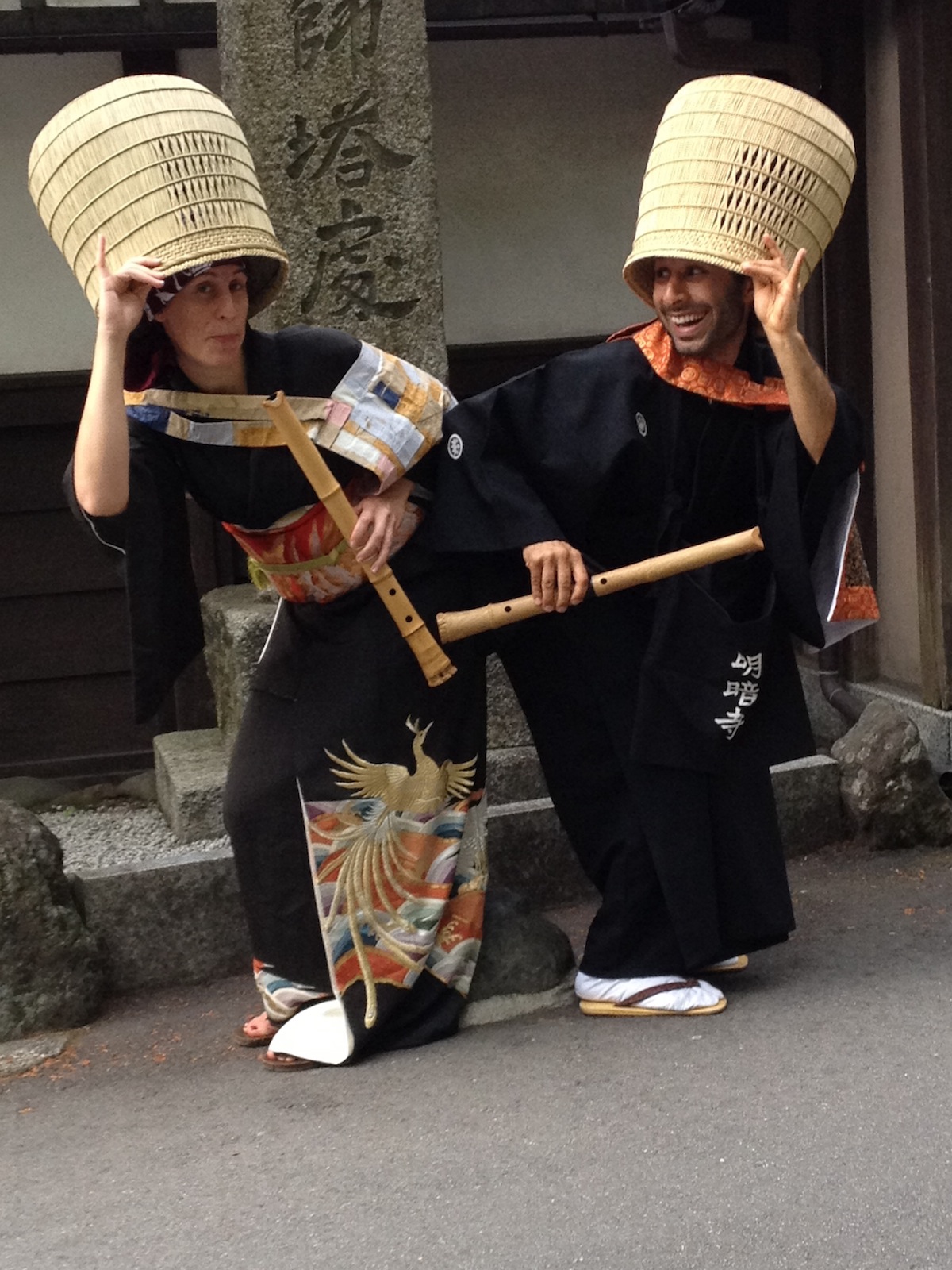
Ten Thousand Words
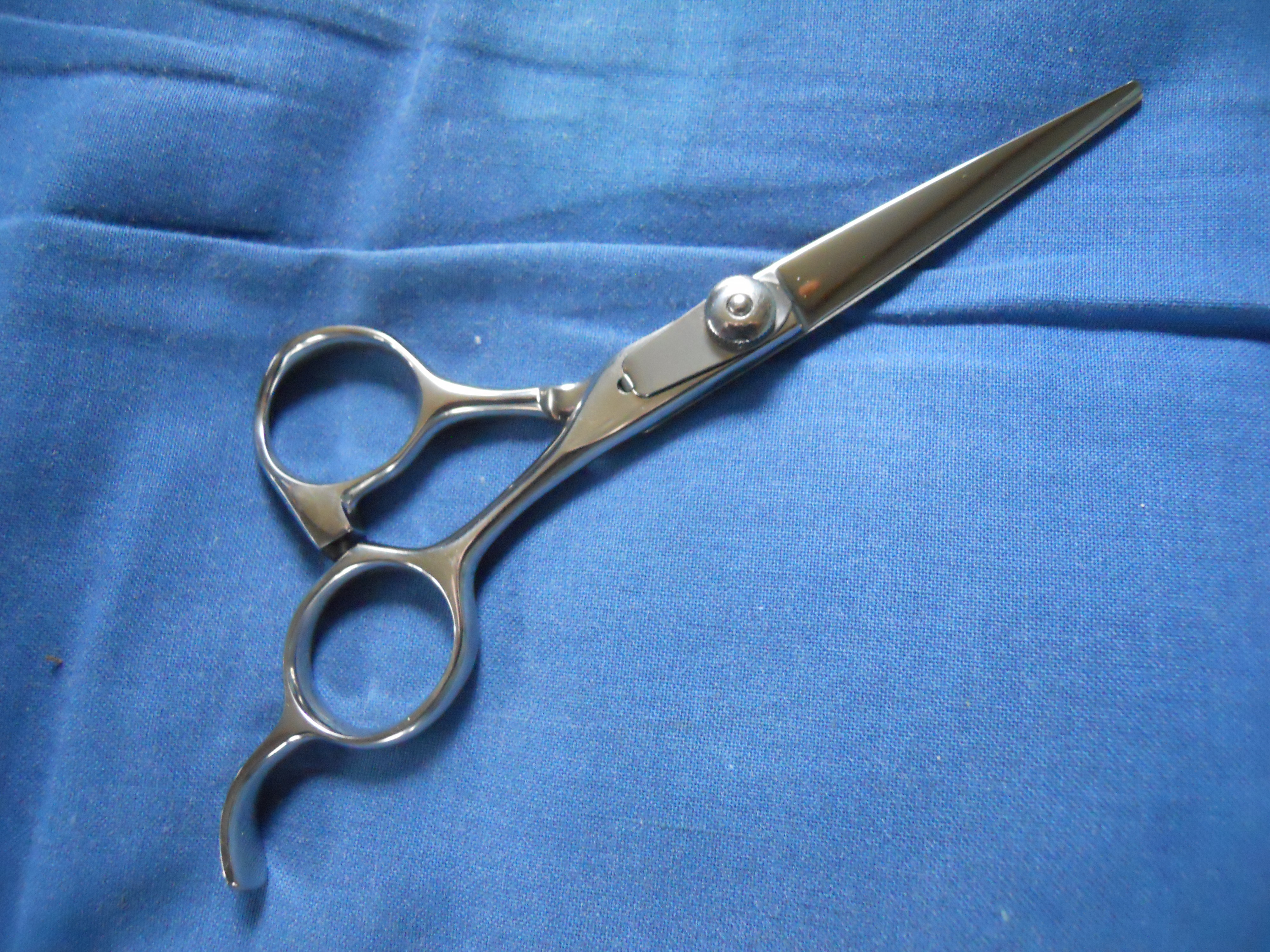
A Cut Above the Rest

So, there I am, wandering through Kyoto business streets when I come upon a knifemaker’s shop. If you know anything of Japanese knives you would be as excited as I was. The Japanese knives that are made by such a maker are made with the care and technique of the samurai swords. Three layers of metal and so sharp that they slice rather than just cut. Although I have enough kitchen knives, I was drawn in by my love of such art. On the wall were displayed the different steps from the chunk of metal to the final product. (I was so awestruck that I forgot to take any photos.) Some of the knives had swirls on the blades like you see on some of the swords.

Looking around, having to remember to stop the saliva from dripping from my mouth, I came across …

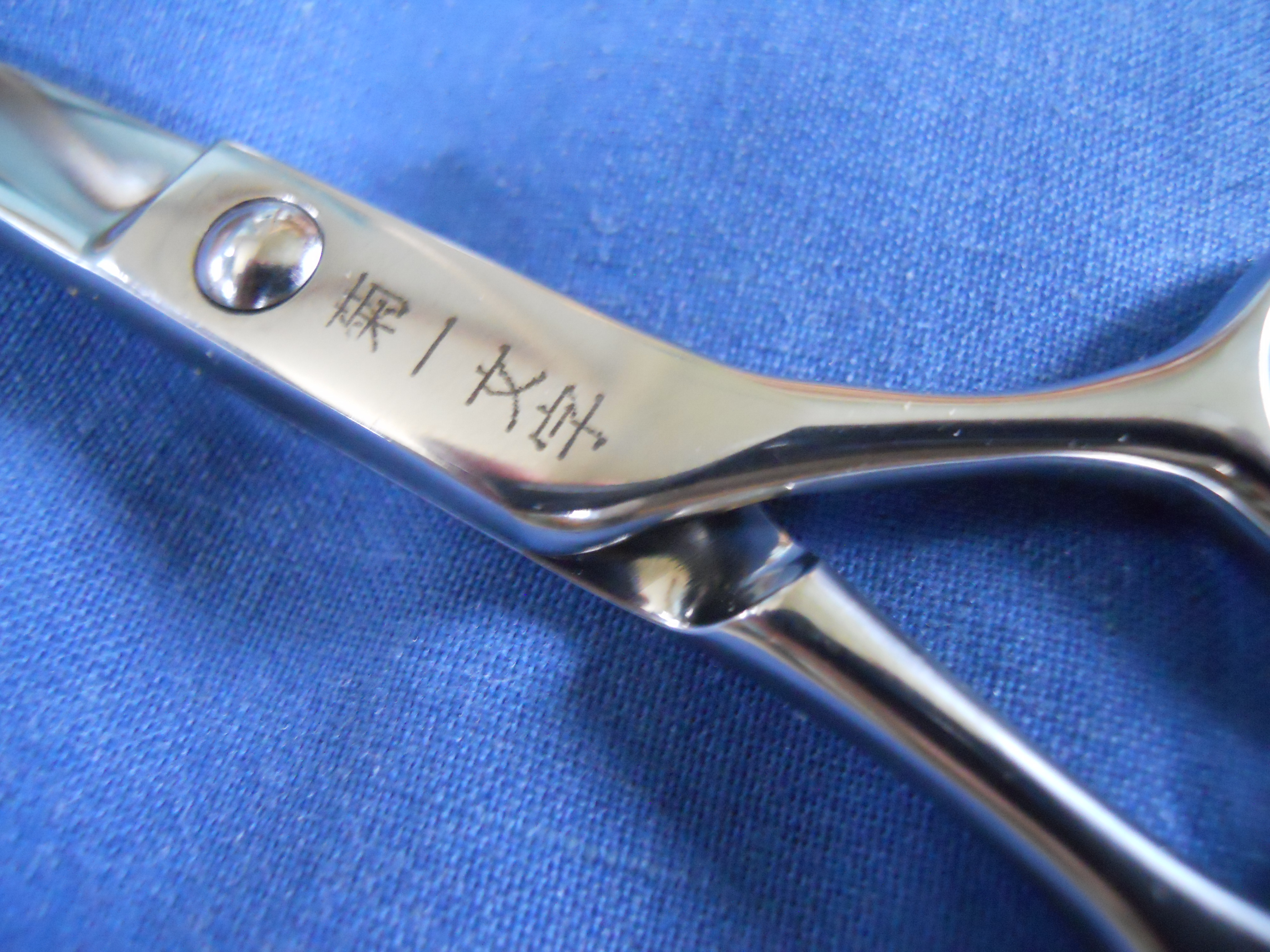
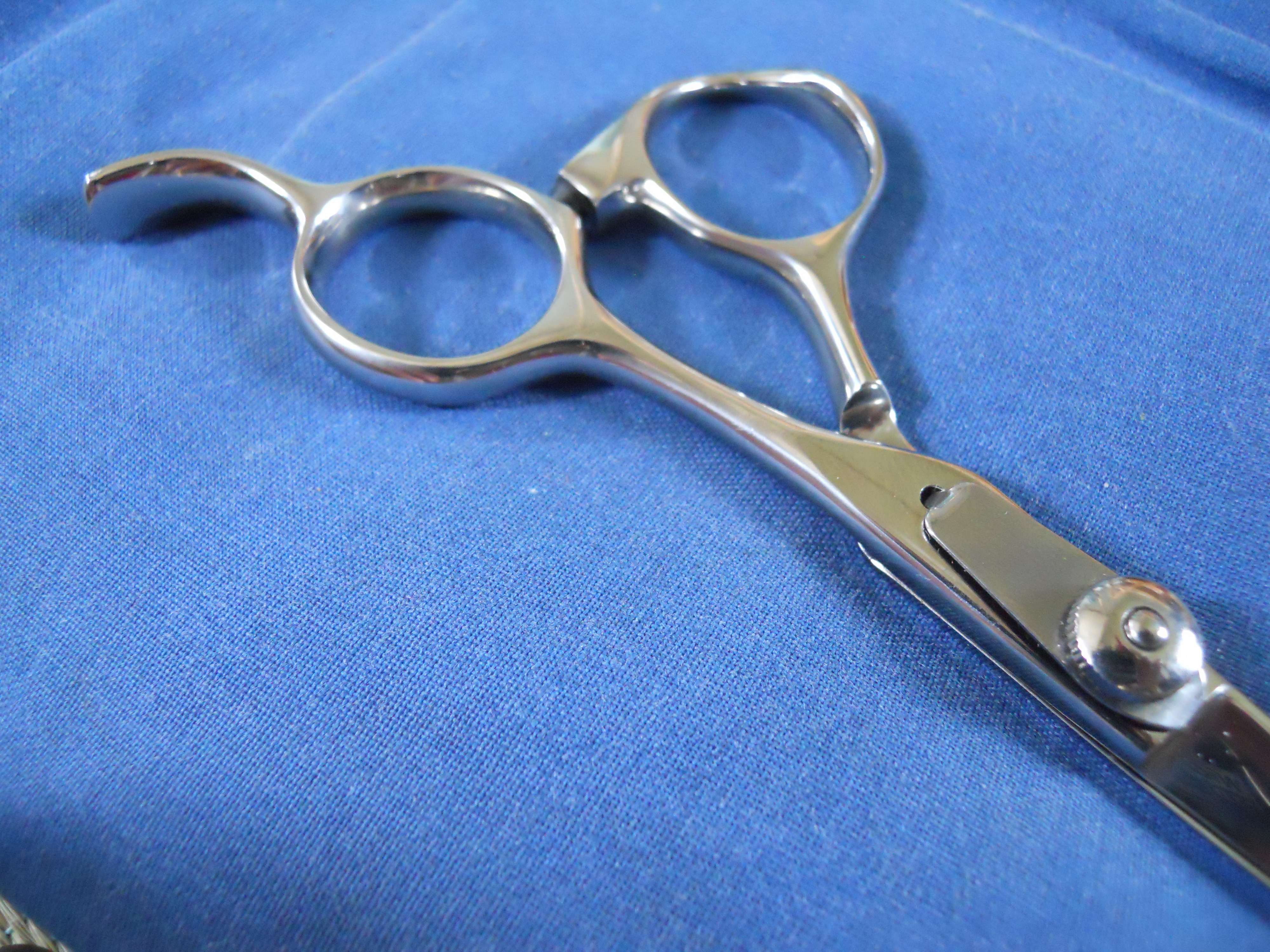
Yes, these are a pair of haircutting scissors. I use them for trimming my beard. From tip to toe, they are about sixteen centimetres (six and a half inches) long.  Look at the beautiful curves of the handle.

Take a closer look….

The thumb hole is shaped for a right hander. I didn’t notice at the time, so, I don’t know if they had a southpaw version in stock. You see the tensioner for the blades. The blades are slightly hollowed for an even sharper edge. The edge is meant to last ten years between sharpenings. With my twice a week beard trim…


The other side… The Maker’s Mark!


I said above that I trim my beard twice a week. Since these new scissors found a new home beside the 95 year old double edged razor, I have found myself being a bit more scrupulous about the stray hairs on my face.

A gentleman’s treasure.


Beginning Kyoto

Hello Friends,
I hope this finds you in fine fettle.

Sitting in my spacious six tatami room* at the Tomato Guest House. Less than a ten minute walk from Kyoto Station.

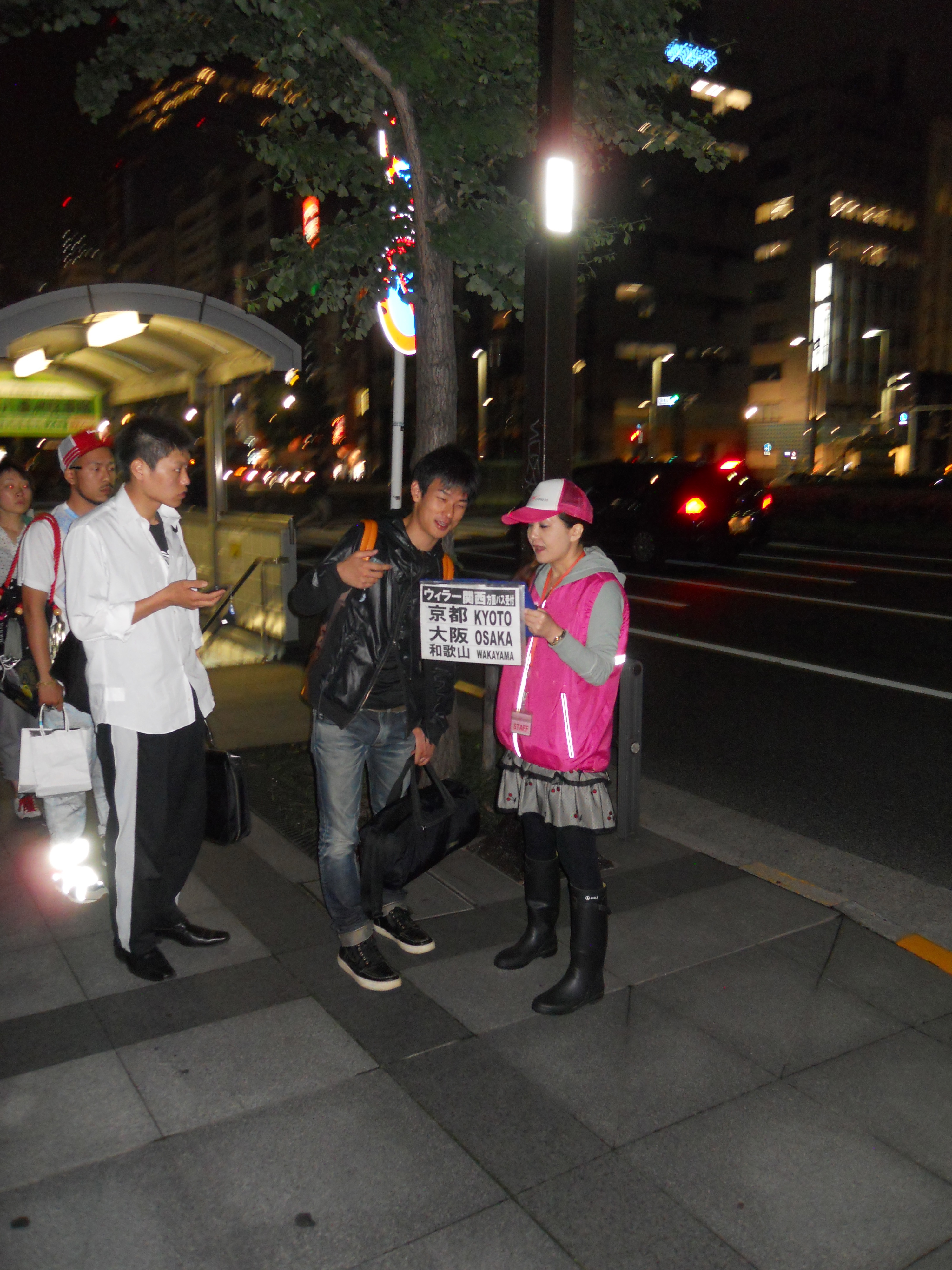
Took the overnight bus from Tokyo. Here’s the lovely Willer Express check-in lady at work.

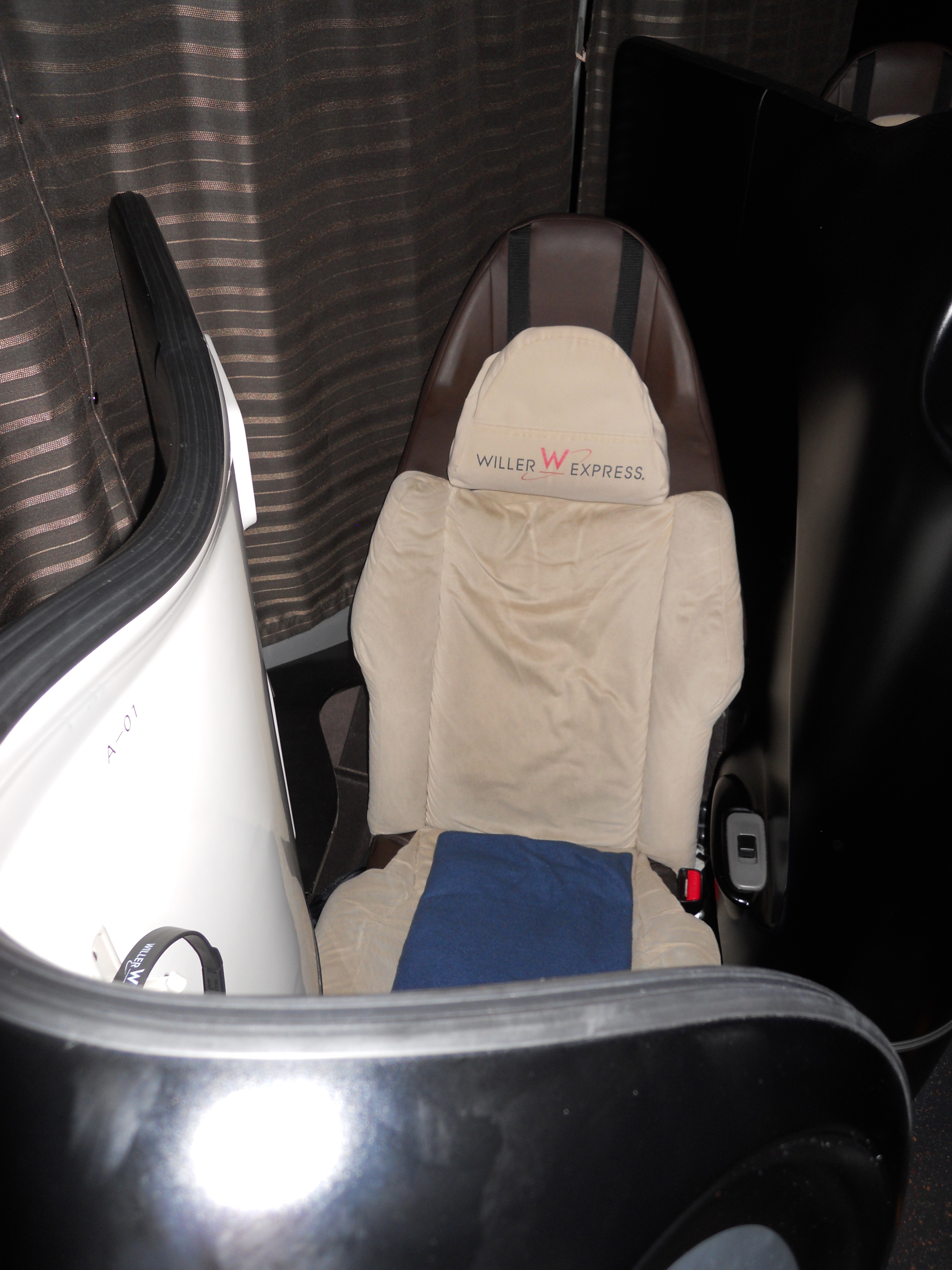
This is a shot with my flash of my ‘cocoon’ on the bus. The actually lighting on the bus was provided by red lights on the ceiling. Very nice as long as you were looking for something big like your seat rather than trying to figure out the controls on the entertainment centre.

The seat reclined way back. That entertainment centre at the front of the space I used to watch a crap Hollywood movie before falling asleep. The ride was very smooth as we were travelling on a main highway the whole time. The main comfort problem was that the length was really for six foot or shorter. I’m six foot two. (Strangely enough, the Indian overnight buses are better arranged. They have enclosed bunks stacked end to end two high that give you a very spacious private place. Very nice for sleeping. Or reading or just looking out the window.)

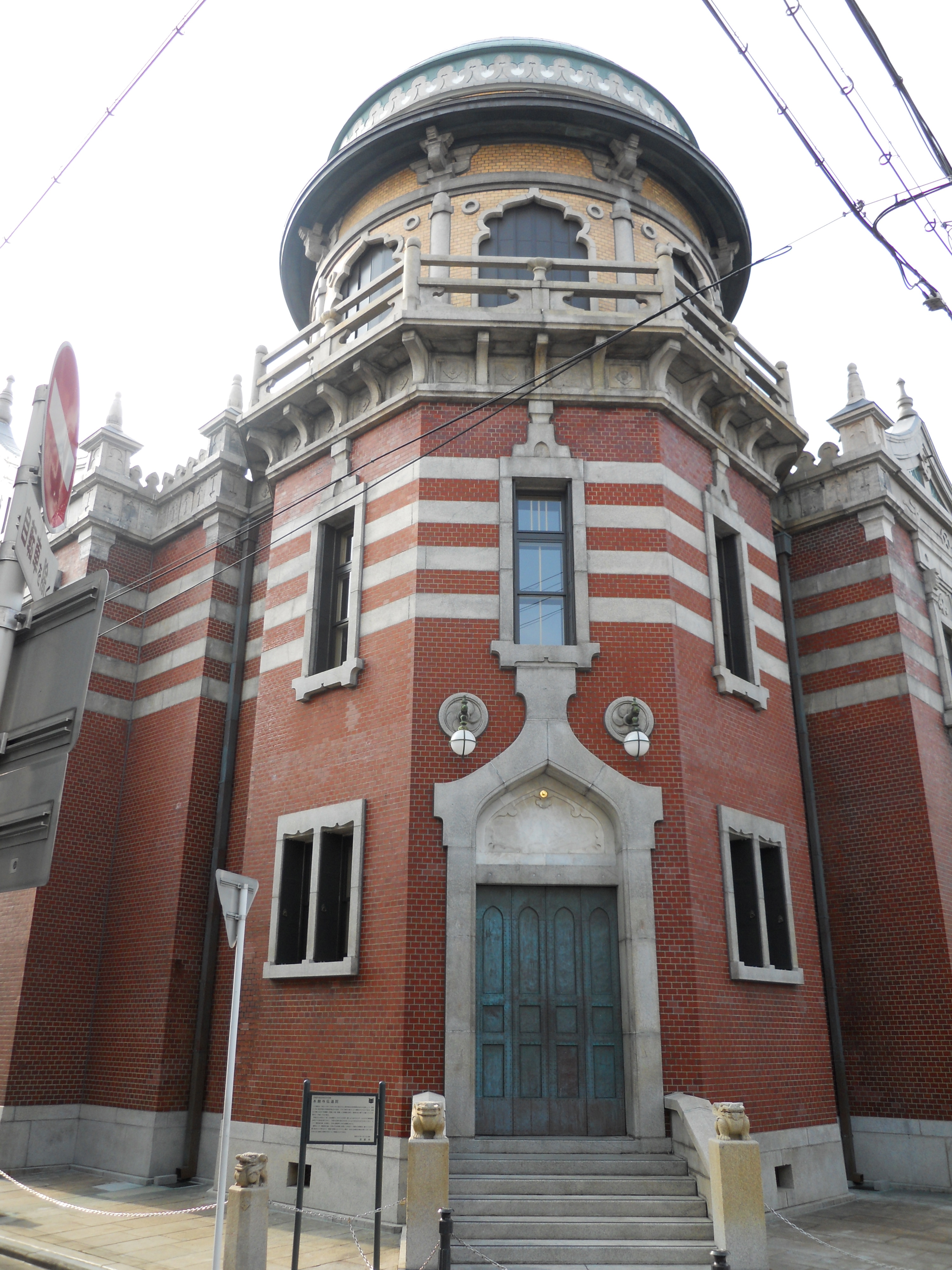
We arrived at six in the morning at Kyoto Station. As happens so often in this life when one has arrived at an early hour, the guest house reception opens at nine. I hung around a temple for a while,  found the guest house location and happened onto this beautiful mosque.


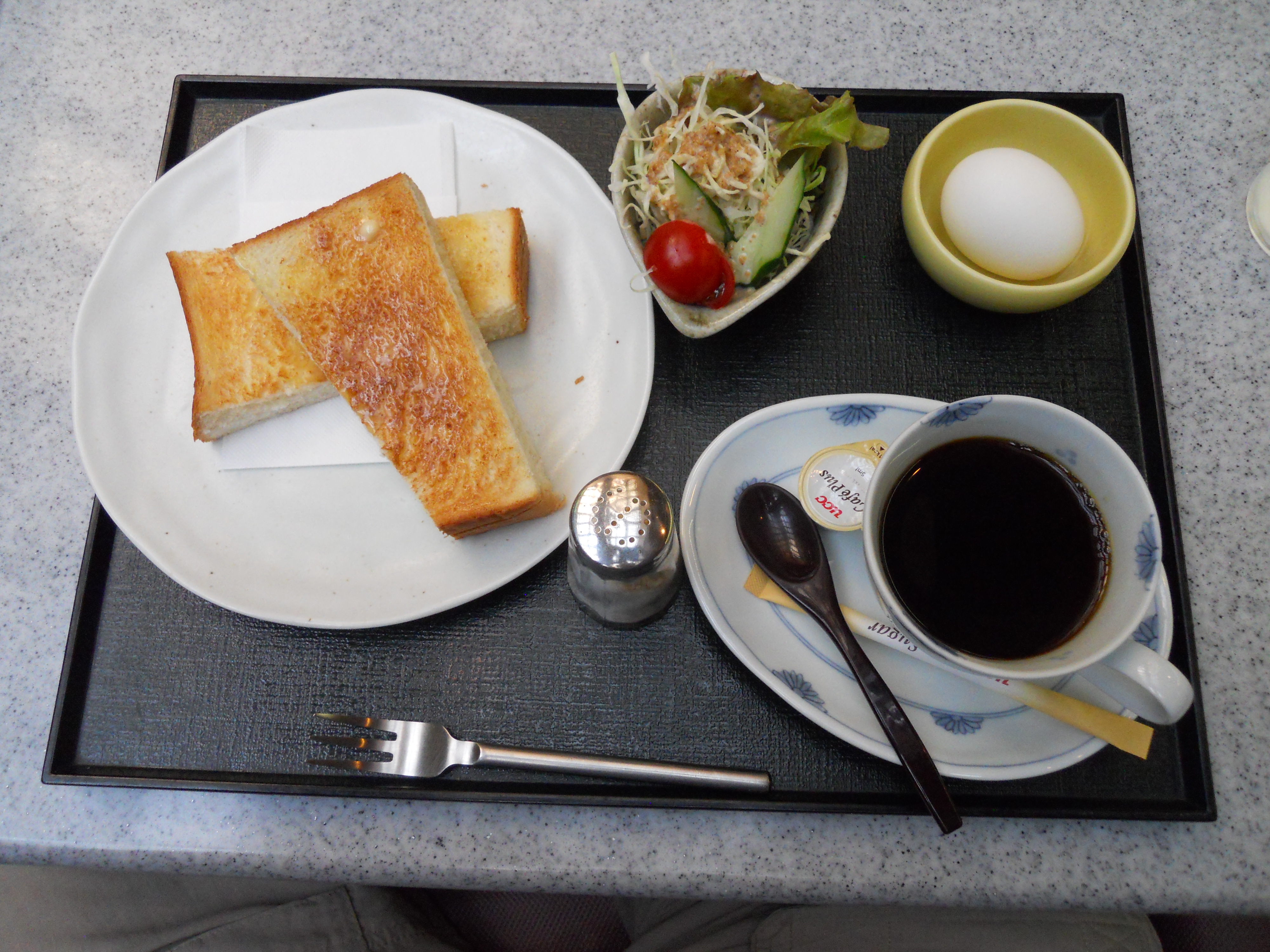
The ever faithful body was indicating it’s need for sustenance when I chanced upon this nice ‘Morning Set’ brekkie at a small hotel. Such a lovely presentation for a simple toast, tea and a hard boiled egg. (And, a salad.) Tasted good as well. (Very rare to find bread other than this white air bread in Japan 😦


At nine, I dropped off my luggage and headed to a sento (public bath) that is open from seven in the morning. After twenty-six hours on the rode, I was ready. Soap and rinse outside the shallow pool. Then, slip into the water so hot that it melts your bones. Did three rounds of hot, cold. Brushed the trusty teeth. Dragged a comb through my hare and once in my togs, stuck one hundred yen in the slot for ten minutes in the massage chair. I could do this on a regular basis with ease.

The guest house has a 4pm check-in. Six hours and counting.

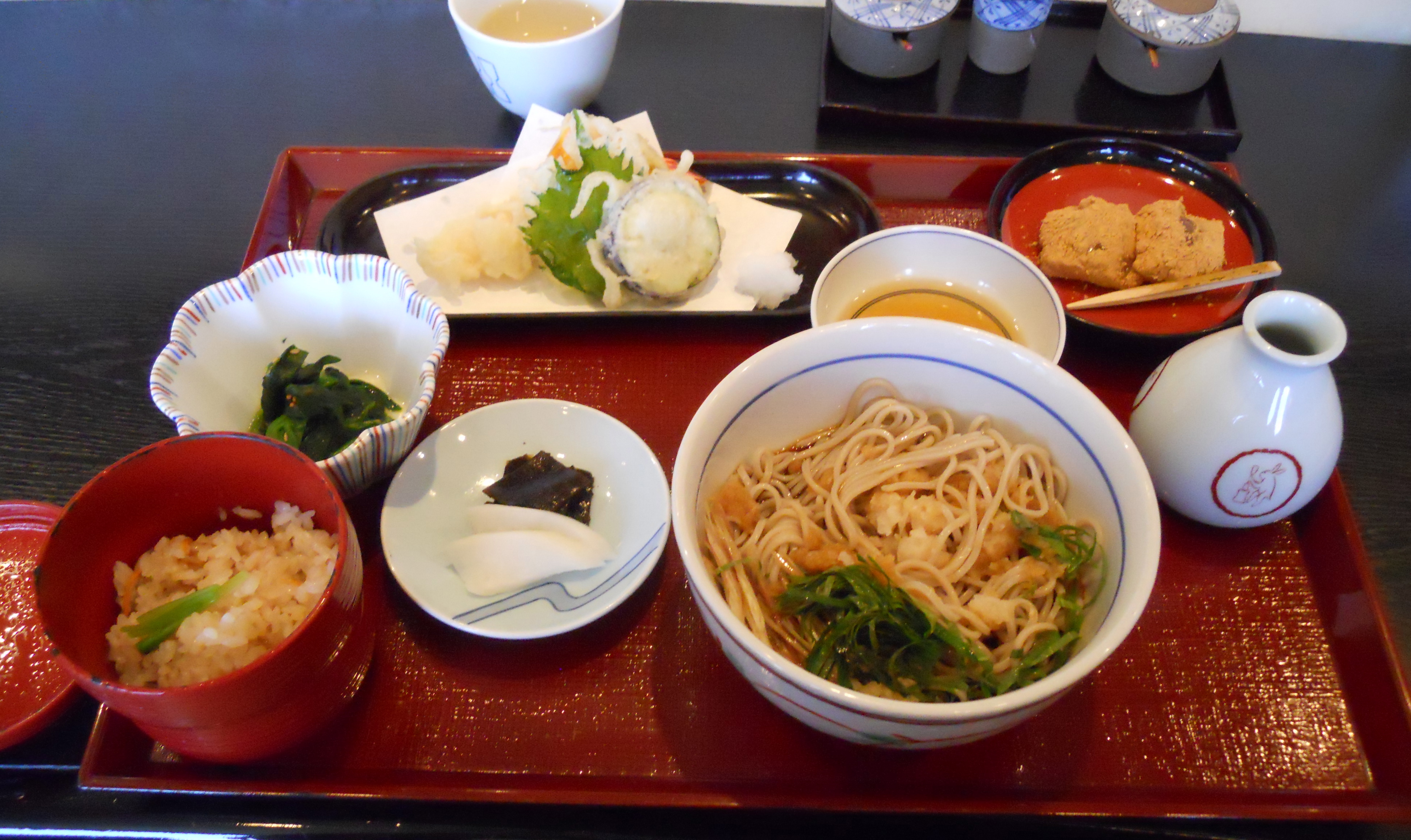
Midday, I lashed out in a top floor restaurant of Isetan Department Store with a wonderful cold soba set. Yummm.


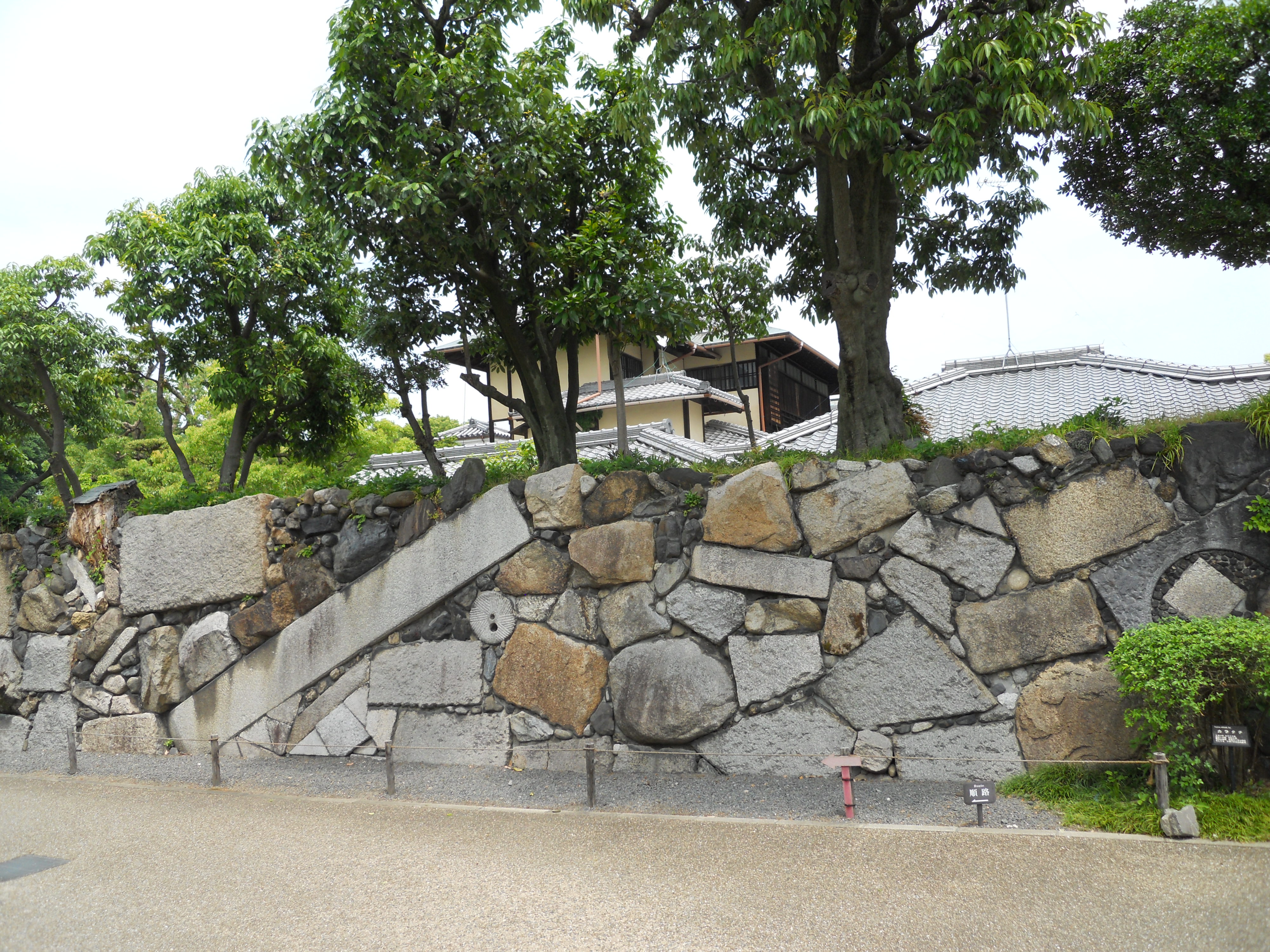
I looked at the tourist map and headed to an indicated garden only a few blocks from Kyoto Station. This turned out to be a successful move.

This beautiful wall greeted me

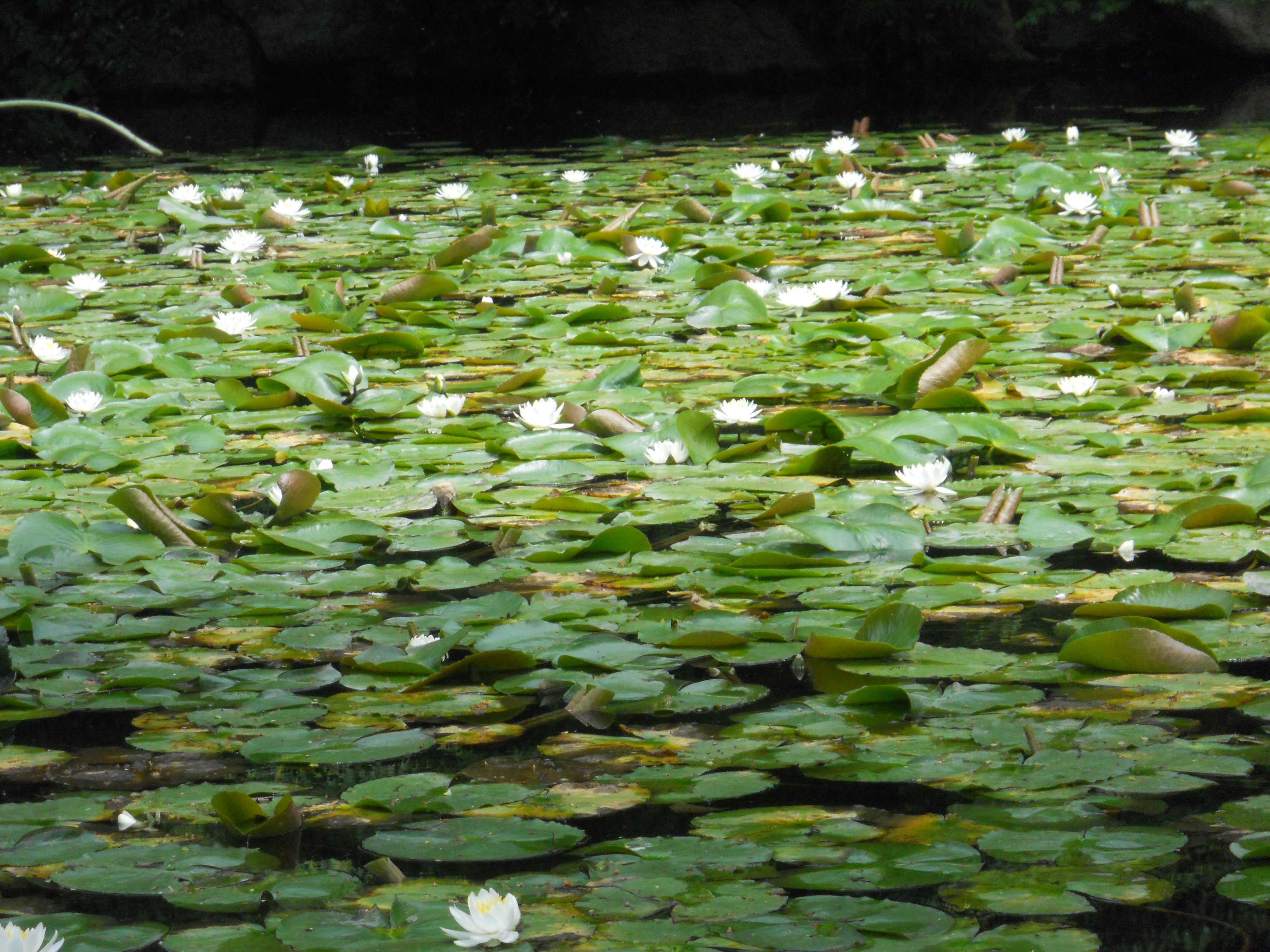
and was followed by a couple tea houses beside a lilly covered lake.

As well as this stream.

I found myself a secluded spot and pulled out the old bamboo for a pleasant little blow. Had to cut it short as I was being attacked by the local mozzies. These secluded spots have their drawbacks.

Following on from the garden, I continued to pass my time eating green tea ice cream and wandering from one sitting spot to the next waiting for four of the clock to appear. Wandering from here to there wishing that I were in my soon-to-be-bed rather than seeing the sights.

However, I knew that I owed it to my reader to make that extra effort and not be collected by the police for curling up in the middle of the sidewalk as I felt to do a few times. (As much as that might make a colourful episode.)

Four o’clock did arrive. Check in was a success. Sorted a few things and descended into that delicious snooze land. Am now sitting with a belly digesting  homemade muesli ( smuggled into Japan) for dinner. Feeling invigorated and looking forward to tomorrow. Will be seeing some sights and locating one or two of the vegetarian restaurants the I have a list of somewhere. On Monday, we begin the Summer Shakuhachi Camp of the Rockies (transplanted to Kyoto) in a lead up to the World Shakuhachi Festival. Yeah, Team Kundan.

Cheers

* A tatami mat is approximately 0.88 metre by 1.76 metres.

OK, I’m going.

Hello Friends,
Over the last few years, so many of my friends have been travelling to all these exotic place. They come back here and say to me, “Kundan, you’re such a homebody. You need to travel farther than Mullumbimby. You need to get out and see the world.”

Well, it just got to be too much, so, I decided to go to the next exotic place that was mentioned to me. Then, some guy tells me about this World Shakuhachi Festival in Kyoto, Japan. (Whatever a shakuhachi is.) Now, I’m a man who sticks to his word, so, I booked a flight for this next Friday to take me to Japan. I told my friends and they said, that’s a good start. It is exotic enough but it’s not far enough. It’s only one time zone. You won’t even get jetlag from that flight.

I had an idea. I called my brother and said, “You think it would be ok with Curt if I came to his wedding?” My brother hesitated and replied, “Hmmm, I’ll put in a word for you but just because he’s your nephew don’t expect him to say ‘yes’. After the last time that you were here… I mean… if I weren’t on such good terms with the fire and police departments….”

Well, my nephew was feeling magnanimous and, so, I added California to my trip. That’s at least five or six time zones. My friends seem satisfied but insist that I do another longer trip after this one and not wait ten years in-between. I’ll see what I can do.

Cheers, Kundan

The Himalayan Mountain Yatra

Hello Friends,
In 2008, after two months of being in India, I was looking a place to which to retreat. I read about a home stay called Orchard Hut, http://www.himalayanlap.com/, located up a valley beyond a small city called Chamba; “beyond where most tourist go.” Sounded like just what the doctor ordered. As it turned out, it was that and more. I went intending to stay a  week or so and stayed a month. The location was beautiful, the food was delicious and nutritious, the water sprang pure straight out of the mountain and most of all the family were so loving and caring I just melted. It was difficult to leave and I have been feeling the tug to return ever since.

Then, this year, I learned of a group of Buddhists here in Australia, http://yatra.org.au/yatra-bushwalking-club/, who organise a couple treks a year that include meditation practice. I was inspired. I contacted the Dhami family at Orchard Hut. In addition to running a home stay for over twenty years, they also organise treks. Several members of the family are experienced licensed mountain guides. I am happy to announce that we have put together the Himalayan Mountain Yatra. A journey in which the beauty and joy of experiencing the inner  and outer heighten the whole. It will be a nine day trek with time at Orchard Hut before and after the trek. Arrival at Orchard Hut is on 15 Sept with departure after completion of the trek on 28 Sept.  The full itinerary is below. I have also begun a blog, http://himalayanmountainyatra.wordpress.com/, and a Facebook page.

The trek days will begin with time for some exercise of your choice before breakfast. Before the walking there will be a 45 minute laughing/silence meditation. After the day’s walk there will be 45 minutes of sitting in wonder. Before bedtime, there will be a circle of spontaneous voicing where we will leave behind all known languages and allow sound to flow through us until we reach silence. Each voice is correct whatever volume, rhythm, pitch, tone or harmony occurs. Walking will be in silence with meal times available for quiet conversation.

There will be porters and ponies to carry the rucksacks and supplies. You will only need to carry a day pack with a few essentials during the walking. The times quoted in the itinerary are walking at an easy pace with breaks. The difficulty will be easy to  moderate. The temperatures should be very pleasant. Lowest in the night time 10- 15 degrees Celsius (that’s 50- 60 degrees Filistine ;-). Noon time around 22- 28 degrees C ( 71- 82 F).

The full cost of the entire adventure including time at Orchard Hut and the trek is Rps 32285 for a maximum of 25 people. Transport to and from Orchard Hut is additional. Any enquiries, reservations or payments should be made to manimaheshtravels@yahoo.com. Mani Mahesh Travels is the Dhami family’s business and can arrange transport from and to Delhi airport or other travel in India.

Please pass on this post to anyone who may be interested.
Cheers, Kundan

Full Itinerary

Day 1 (15 Sept)- Arrive at Orchard Hut.
Sleep in tents or rooms at Orchard Hut.

Day 2 &3 – Stay at Orchard Hut. Short walks or treks available.
Sleep at Orchard Hut.

Day 4 – After breakfast Mountain Yatra starts to Rulpuli (Ht.2225M) (Ridge Moor Cottage) around 4-5 hrs hike through forest of Devdar (cedar) and oak trees terrace fields and tribal shepherd villages. Reach Rulpuli by the tea time. From where one can see 360 degree view of Himalayas ( Dhauladhar and Pir panjal ranges)                                                                             Dinner and Camp Fire.                                                  Night stay in tent at Ridge moor cottage.

This trekking hut away from the village is at about 2225m. and has a spectacular 360 degree view of the Dhauladar ranges and snow capped mountains of the Pir-Panjal Himalayan range.  The house, built in traditional form, is at the peak of a mountain on a pasture surrounded by spruce, cedar and rhododendron trees.  The place is 9 to 10 km from Orchard Hut and a 4 to 5 hour trek.

Day 5 — Excursion to Kunbag –Kassa  (holy mountain ridge) and back.
Night stay  just like previous night.

Day 6 –Mountain Yatra ( trekking) continue towards no men land Khabbi gaining more height .
Night stay in tents.

Day 7 – Today Yatra touch’s the height of about 3000mtrs. named TOPI, and we reach other side of the highest point named SUNDERANI – DHAR.                                           N /S in tents on grassy pasture.

Day 8 —  To day trekking up on the ridge of mountain known as DIHBARI – DHAR and back. Views both sides of the ridge are spectacular.                                                           N/S just like previous night.

Day 9 – Yatra continues descending to a place TALLI, spending  night in tents.

Day  10—Early morning Yatra starts to a beautiful place CHAKHUND – LAKE. Hike can take 6-7 hrs. Chakhund is the place where a small lake on the pasture surrounded by cedar trees looks like jewel on the earth. Again we enjoy 360 degree views of Himalayas.                                                    N / S in tents.

Days 11  is spent at Chakhund  providing  time to enjoy the lake or a short trek.
N / S in tents.

Day  12 – Descending  to road head takes 5-6hrs. from where up to road head of Orchard by jeep.
N / S in tent or room at orchard hut.

Day 13 – Relax at Orchard Hut-
Night in tent.

Day 14 (28 Sept) – Leave Orchard Hut or stay on for some more R&R.

Ro Buki

In May 2007, I began studying shakuhachi with Kaoru Kakizakai Sensei. The practice of blowing with all the holes closed is called Ro Buki. ‘Ro’ is the note being played. It is recommended that you begin each practice with ten minutes of Ro Buki. At our lessons, we begin with a briefer Ro Buki. In one of my last lessons during this last visit , Kaoru said that I had finally ‘gotten’ it. I was immensely pleased. I was back in Oz for one month before I arranged a skype lesson. It occurred on Monday this week. I had lost the form! I could not play ro correctly! We spent half an hour searching. In the end, I could just barely play it correctly. That I had become tense in the situation was a definite drawback. So, that evening and the next day, I searched and found it again. I felt that I had it correct but I wanted to be certain, so, I arranged for a lesson the next day.

I had been successful!!!! You may have heard me shout ‘Yes’ at the end of the lesson.

An interesting side-effect has been that I can now play stronger sounds, longer phrases and practice for longer periods. Big smile.

Just thought I’d let you know.

The Book of Changes

A couple days ago, I got an email from one of the members of the Vihara Community of which I became a share holder this last year. He was informing us of his decision to withdraw from the enterprise. His reason being our shortage of shareholders as we neared the point where we would finalise our purchase of the magnificent property and infrastructure that was our first goal as a group. As things stood, we would need loans from some of the members in order to finance this first step. That would leave us in a position lacking reserves in money and energy to launch the community. What would be minor difficulties in other circumstances could develop easily into major difficulties with all of the attendant stress added. We had been hoping to recruit additional shareholders in the next few months but our efforts to date had met with limited success. So, the decision by this share holder, soon followed by a second, led to the rest of us realising that this particular venture was coming to an end.

I had been excited by the possible manifestation of the vision set forth in the Vihara Manifesto. It fit me very well. Though I made plans and took actions in that direction, I was aware of the possibility of the above occurring. Life is bigger than me and I have to move with what is.

Did I feel disappointment? Yes, I did. After all, he was sitting there on the floor next to my right leg; his squat rounded cubical body with the huge mouth and woeful eyes squirming in anticipation of my giving him the energy to turn into a screaming monster. I gave him a glance and turned away. I had better things to do. (Don’t know where he is now. When I ignore him, he just pisses off.)

The first cab off the rank for my attention was the feeling of immense gratefulness for the friends who have accompanied me on this part of the journey. It’s been a joy to get to know new friends and better know previous acquaintances. After that, I turned to reflect on the recent journey. What steps had we taken that helped the cause and what could we have done differently to our advantage? I let the options surface and absorbed the insights for future opportunities.

Life can take sudden turns. That’s just the wonder of it. Now, life is overwhelming me with possibilities. I am so fortunate: I’ve got a comfy bed to sleep in. A lovely house to live in located in a sub tropical paradise. Good food available. I’m healthy. There’s my Tai Chi and Bagua. My flute is always at hand to stretch the heavens. To top it all off, I have somehow learned the art of letting go into a meditative state. What more could one ask?

So, dear friends, I wonder what experience is awaiting me on the next page of this book.

The Space Cowboy

I just returned from a performance by the Space Cowboy in the Byron Bay Community  Centre. I’ve seen him perform three times now. The first time was at the radio station. I was standing just two feet away when he bent a spoon that a woman was holding. He wasn’t touching the spoon. Just had his hand a few inches away. He makes spoons bend and twist. He uses spoons that the audience brings. It’s the real thing. Tonight he did it with a brandy snifter. A lady was holding it and the stem bent 45 degrees. He talked about a couple of the theories put forth by skeptics. He showed that those theories were incorrect. It’s the real thing, what he does. He does it all the time around the world.

Another example was when he started off the show with us tossing around a foam ‘brick’ to pick the participant for the trick. He then wrote a three digit number on a paper and, after, asked the guy to clear his mind and say the first three digits that came to mind. It was those numbers. As I said, I’ve seen him perform three times and he does these things easily. He makes you admit that there is more to reality than fits in the box.

He finished by swallowing a florescent tube with a mic attached to it’s end. You could hear his muscle adjusting as the tube went down and then his heart beating. Very dramatic.

He’s was born in Byron and gave his first performance at the monthly markets when he was eight years old. See him if you have a chance. He tours the world.

I’m off to pick a spoon to practice on.

Morning Salutation

Hi Friends,

Each morning here finds me at some point out in front of the trailer doing my morning workout. I used to do this in the small street that passes by. Residential streets in Japan really are small. In order for two small cars to pass, one has to pull over and come to a complete stop. My little street is used by some people as a short cut and therefore receives more traffic than would be normally generated by the neighbourhood.

The result of the above was that my tai chi and bagua forms would be interrupted at various times by an approaching car. I would notice the impending occurrence and maintaining my state as best I could step to the side of the street. Then, as the cars would pass, I would make a small bow to the drivers. Some would be surprised the first time this happened, however, almost all would bow back. If it was a repeat performance, their bow would be a genuine greeting. This would also occur with people out for a stroll with their dogs or kids going to school.

There is a lot of bowing in Japan. In the supermarket, the cashier will make a formal bow after giving you your change. There is the temptation by foreigners to write off such bows as just form and no substance. What I have found in such situations is that when I return the bow with sincerity, then, the substance of the bow is in existence and we both feel it. A bow can be a very beautiful gesture.

There is a child and mother who wait at the t-junction just close by each weekday morning for a brightly coloured kindergarten school bus. The bus has a woman driving and another woman who attends to the children. The attendant gets off the bus and approaching the mother and child, greets them and escorts the child back onto the bus. As they drive by me the driver gives a little bow and the attendant waves while encouraging the children to wave as well. What a big smile stretches my face as I wave back.

A few weeks ago, I cleared a section of the area that my trailer shares. It’s is full of large gravel set down to hold car parking. I began to practice my forms without the interruptions. It is such a pleasure to be able to move smoothly through my forms. Yet, I do miss the morning ritual of making way. I still get to wave to the kindergarten crew and say hello to the occasional person and dog who pass by. As a part of my exercise, I take a walk up the nearby street past houses where I encounter other walkers and sometimes someone out in his or her garden. I have even had short conversations at times. (Very short due to my limited vocabulary.)

Then, there have been a few mornings when I am walking along and see a person approaching slowly. The person’s head is down, there is a slight hunch of the shoulders and almost a shuffle in the walk. When I get close, I say my ‘good morning’ and suddenly a face pops up surprised and a shining smile appears immediately followed by an enthusiastic ‘good morning’. Yeh, what a good morning.

Ohayo Gozaimusu, Kundan